
Choosing resources
How to read a Supplement Facts panel, line by line.
The panel on the bottle is a short document with fixed fields. Here is what each line tells you, what it leaves out, and which words belong to the seller rather than the FDA.
Education only. This page does not recommend any supplement, brand or dose.
You may have had a supplement bottle in your cart when the ad promised a natural answer to diabetes, with a price that ended at midnight. Days later you found a warning page, and the embarrassed question arrived: what else am I missing?
That question is not a personal failing. It is the start of a method. Dietary supplements carry a panel titled Supplement Facts rather than Nutrition Facts. The fields repeat from bottle to bottle, so learn them once and the next label takes about five minutes.
This page walks a fictional panel, field by field, then shows which parts follow labeling rules and which are the seller’s own words.

Practice with the free toolkit.
The free Diabetes Information and Appointment Toolkit has twelve parts in one printable book: a start-here guide, the test words you will hear, questions about your results, programs to ask about, label practice, a question builder, a source check, a caregiver pack, a 30-day planner, a glossary, a seven-exercise workbook and a household week planner.
Free, no payment card. Reply VERIFY to our short email and we'll send you the toolkit, then 5 short emails over 12 days (one names our own $9 Fillable Edition), then at most one email a week, when we publish a new guide. Every email has an unsubscribe link.
The short version.
If you read only one part, read this one. Four lines carry most of the information.
Find the serving size.
It sits near the top. Every amount below describes that amount.
Check the servings per container.
It tells you how many of those servings the package holds.
Read amounts as amounts.
They are quantities, not benefits. A bigger number is not a stronger promise.
Read the disclaimer.
It is the plainest sentence on the bottle, and it names who has not checked the claim.
Five minutes is enough. Write what you see while you are looking. A short note beats a strong memory in an aisle or an exam room.
Start with the title and the serving size.
Just under the title, two lines do the setup work: servings per container and serving size. A serving might be one capsule, two capsules, a softgel or a scoop. Every amount further down describes that serving.
This is the most common misreading. If the serving is two capsules and the bottle holds sixty, the panel is describing thirty servings. Read the serving line first and the rest stays in proportion.
On food labels, the FDA says the serving size reflects the amount people typically eat or drink, and that it is not a recommendation of how much to have. The habit carries over: a supplement panel describes an amount, not an instruction.
Servings per container: 30 · Serving size: 2 capsules · Amount per serving: 500 mg
An invented label used for practice only. It recommends no product, no dose and no serving.
Read the amounts, the symbols and Other Ingredients.
Next come Amount Per Serving and a column headed % Daily Value. The first is how much of each listed ingredient one serving holds. The second compares a nutrient with a daily reference amount, where one exists for it.
The FDA’s consumer guidance says a Supplement Facts panel must list the serving size and the number of servings per container, and must give the amount of each dietary ingredient per serving, except for ingredients inside a proprietary blend. A blend row can show one total with several ingredients named inside and no individual amounts. Write it down as it is: blend, individual amounts not listed.
Many rows leave the % Daily Value column blank. That is common where no daily reference amount applies. A blank is not an error and not a warning; it means that column cannot help you with that row.
Beside an ingredient you may see a small mark: an asterisk, a cross, a dagger or a letter. It has no fixed meaning of its own. The same mark appears at the bottom of the panel next to the words it points to, often a note that no Daily Value has been set for that ingredient. So when someone asks what the cross on a Supplement Facts panel means, the honest answer is: follow it down. A mark with no matching footnote is an open question.
Below the ingredient rows, a heading called Other Ingredients lists what else the product contains: fillers, binders, flavors, colors and often the capsule itself. Read it slowly if you avoid certain ingredients or have reacted to something before. An unfamiliar name is not automatically a problem, but it is worth a photo and a question to a pharmacist.
Which parts follow rules and which are seller words.
Two voices share a supplement bottle.
The panel itself follows labeling rules, and that shared format is why two very different products can look almost identical on a shelf. What the rules do not do is check the product for you. The FDA does not approve dietary supplements before they are marketed, and the FDA does not limit a supplement’s serving size or the amount of an ingredient in a serving. The manufacturer decides, and that decision does not need FDA approval.
The words on the front of the bottle and in the ad belong to the seller. A line on the front that speaks to blood sugar is written to sell. Near a claim like that, the seller prints a disclaimer. In plain words, it says the FDA has not evaluated the statement. Read it twice. It is the shortest honest answer to the question, who checked this claim?
Where the line gets crossed. The FDA keeps a consumer page about illegally sold diabetes products. It describes items sold with disease claims the agency had not evaluated as safe and effective. If an ad promises to end prediabetes, or to replace your care plan, you are past a label question and into a warning sign.
NCCIH, part of the National Institutes of Health, describes the evidence on supplements and diabetes as limited, and advises people to talk with their health care providers about any supplement they use, so decisions can be shared and well informed. That is not a verdict on one bottle. It is a reason to bring the bottle to someone who knows your medicines.
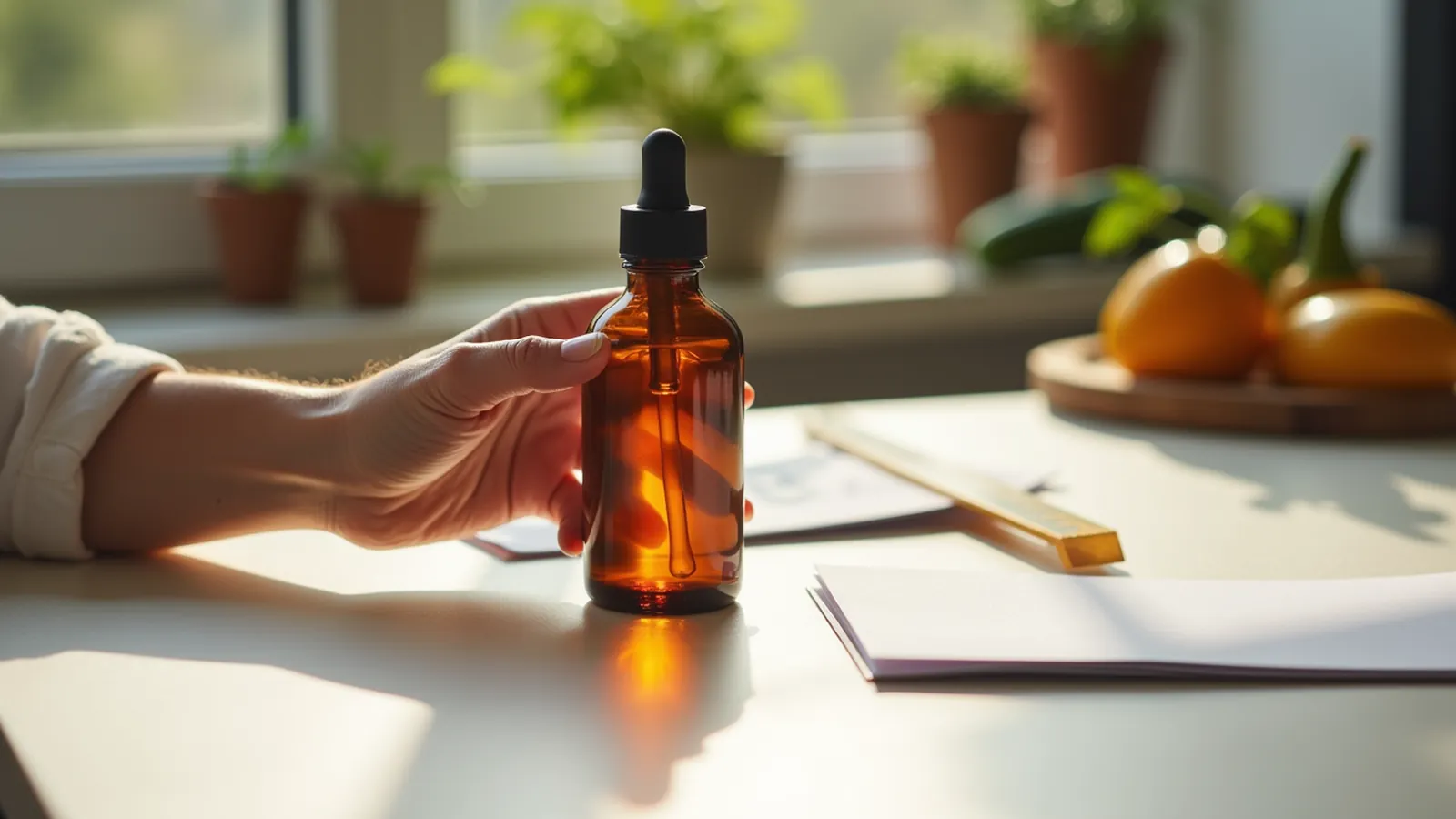
Run the five-minute check before you pay.
You do not need to buy anything to do this. Stand in the aisle or open the product page and work down the list.
- The panel says Supplement Facts. If a product sold like a supplement shows Nutrition Facts instead, ask what it actually is.
- You can say what one serving is. Two capsules, one scoop, one softgel.
- Every amount belongs to that serving. You can point to the serving line and explain the numbers from it.
- Each symbol matches a footnote. Follow the cross, dagger or letter to the bottom of the panel.
- You have read the Other Ingredients list. Especially if you have allergies or avoid certain ingredients.
- The disclaimer is there. If the front of the bottle sounds like a disease claim and the statement is missing, stop.
- There is no pressure. A countdown timer is a reason to close the page, not to hurry.
A missing item is not proof of fraud. It is a question you cannot answer from the label, and those are the ones worth carrying to a pharmacist.
Write five lines and take them with you.
Your note can be short. This one is written about an invented product.
A five-line panel note
Front of bottle: a blood sugar line on the label — the seller’s words.
Panel: Supplement Facts. Serving size 2 capsules; amounts are per 2 capsules.
Symbol: a dagger beside one ingredient; the footnote says no Daily Value set.
Other Ingredients: four items listed; one name I do not recognize.
Disclaimer: present. Next question: what is that ingredient, and does it interact with my medicines?
Made up for practice. It does not describe a real product, person or result.
Notice what the note does not contain: a decision. It ends with a question for a pharmacist or your care team, which is where a personal decision belongs. Do not stop or change a prescribed medicine on your own because of anything printed on a bottle.
Why a label page instead of a remedy.
If you came looking for holistic options and landed on a page about serving sizes, that is a fair disappointment. Homework is the last thing you need on a weeknight.
Here is the honest reason. This site is education, not a clinic. The name includes the word remedy; the content does not promise one, and this page names no brand, no dose and no product to take. Nobody has clinically reviewed this page yet, and the byline says so.
If a free health site has turned into a sales pitch on you before, point that suspicion here first. The Editorial Policy and the Review Methodology describe how pages are written and what a review would involve. The checklist in the box below works in your browser and asks nothing about your results, your medicines or your diagnosis.
You cannot read a panel and learn whether a product will help you. You can learn what the seller claims, what the label lists, and which questions are still open. That part takes five minutes, and you can do it before you pay.
Quick answers.
What does the cross on a Supplement Facts panel mean?
It is a footnote marker with no fixed meaning of its own. The same mark appears at the bottom of the panel next to the words it points to, often a note that no Daily Value has been set for that ingredient. Follow it down before you decide anything.
Does the panel tell me whether a supplement works?
No. It lists what is in the product and in what amount. Whether it helps, who should avoid it and how it interacts with your medicines are questions for your care team or pharmacist.
How do I read a supplement label in five minutes?
Start at the top: the title, servings per container and serving size. Read amounts as amounts for that serving, follow each symbol to its footnote, read the Other Ingredients list, then find the disclaimer near any claim. Write down what is missing.
General education only. This page helps you organize learning and questions. It is not medical advice and does not recommend a treatment, diet, medicine or blood-sugar target. Personal health decisions belong with your care team. Medical and educational disclaimer
Which guide fits your question.
Each of these takes the same panel one step further.
- Supplement scams: the sales-page signals to notice before you pay.
- Look up a product on the FDA warning pages: search one name and keep a dated note of what you find.
- Check a natural remedy claim: compare one claim with what NCCIH and the FDA say on one page.
Sources and editorial notes
- US Food and Drug Administration, Dietary Supplements: What You Need to Know, retrieved October 18, 2026.
- US Food and Drug Administration, Dietary Supplement Labeling Guide, retrieved October 18, 2026.
- US Food and Drug Administration, Serving Size on the Nutrition Facts Label, retrieved October 18, 2026.
- US Food and Drug Administration, Illegally Sold Diabetes Treatments, retrieved October 18, 2026.
- National Center for Complementary and Integrative Health, Diabetes and Dietary Supplements: What You Need To Know, retrieved October 18, 2026.
Examples are illustrative. Not yet reviewed by a clinician. See our Editorial Policy, Review Methodology and Affiliate Disclosure.
Read the panel, then stop for today.
Source Credibility Checklist
Check who wrote a claim and what supports it. Free online or as a PDF.
Supplement Scams: Before You Buy Blood Sugar Support
Run a simple eight-point check on any pill ad before you pay.
FDA Diabetes Supplement Warnings: Look Up One Product
A five-step lookup with a date, so you can ask your care team.
Start with one useful question.
Get the free Diabetes Information and Appointment Toolkit. No purchase required.
Free: reply VERIFY to our short email and we send it to you, then 5 short emails, then at most one email a week, when we publish a new guide. Every email has an unsubscribe link.